Parts designed around the equipment
A cover or housing needs to relate to the machine around it. The manufacturing brief should identify the surfaces it meets, mounting points, openings and the space available for assembly. Dimensions supplied for the project form the reference for reviewing the part.
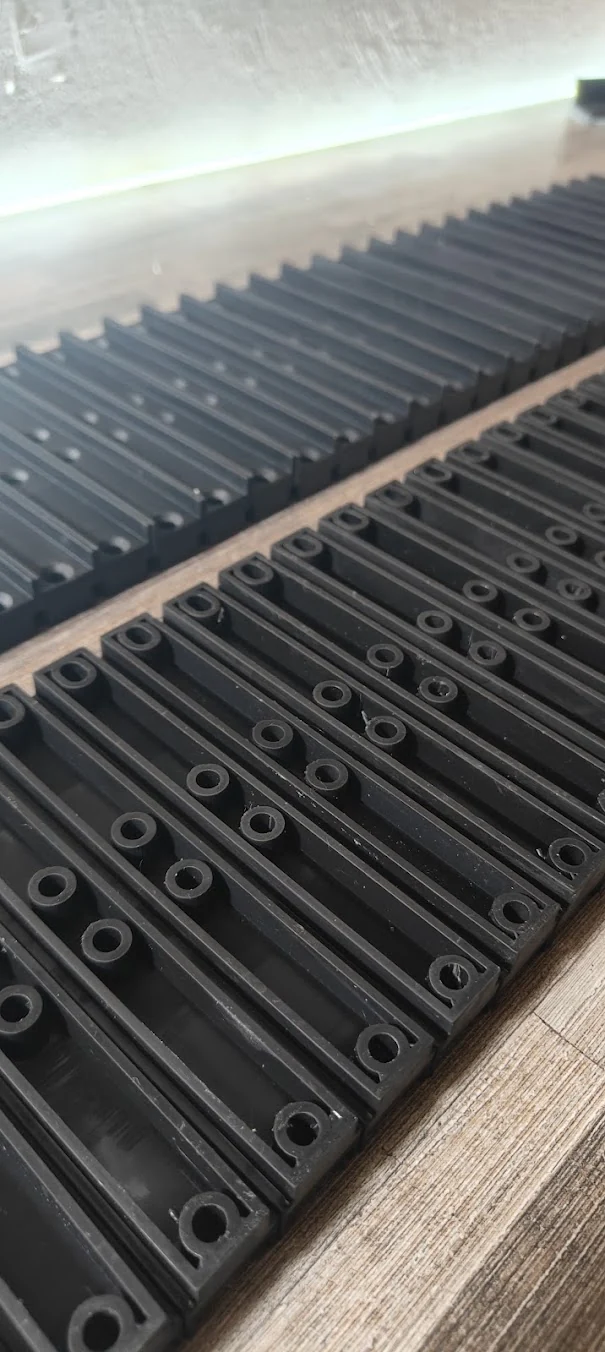
The photographed black components are custom covers and filler parts for larger machines. Their ribbed faces and circular mounting holes show the kinds of geometry that can be incorporated into a repeated printed component. A similar enquiry should describe what the part covers, supports or connects to.
Batch-produced bushings, end caps and sleeves are another example of industrial component manufacture. For a similar part, provide the drawing or confirmed dimensions, the mating component and the quantity required.
Review the design before production
A project can start with an existing component, a drawing or a digital model. Our design team reviews the information available and identifies the dimensions and assembly details that need to be established. Where a reference part is supplied, the brief should distinguish the features to retain from those that need changing.
Prototype work provides an opportunity to review shape, clearances and assembly before agreeing a production quantity. Fit checks should use the actual mating hardware and confirmed dimensions. If a critical measurement is missing, it needs to be supplied before fit can be confirmed.
Material, finish and functional requirements
The intended use guides the manufacturing approach. Tell us about the working temperature, loads, exposure conditions and any contact surfaces, alongside the required appearance. These details are reviewed before material, finishing work and cost are agreed.
A prototype for checking geometry can have different requirements from a part intended for use on equipment. Make that distinction clear in the enquiry. We can then discuss the design support, production approach and checks appropriate to the individual component.